CWC Tokenomics Explained: 200 Million Supply, Allocation, Vesting & Burns
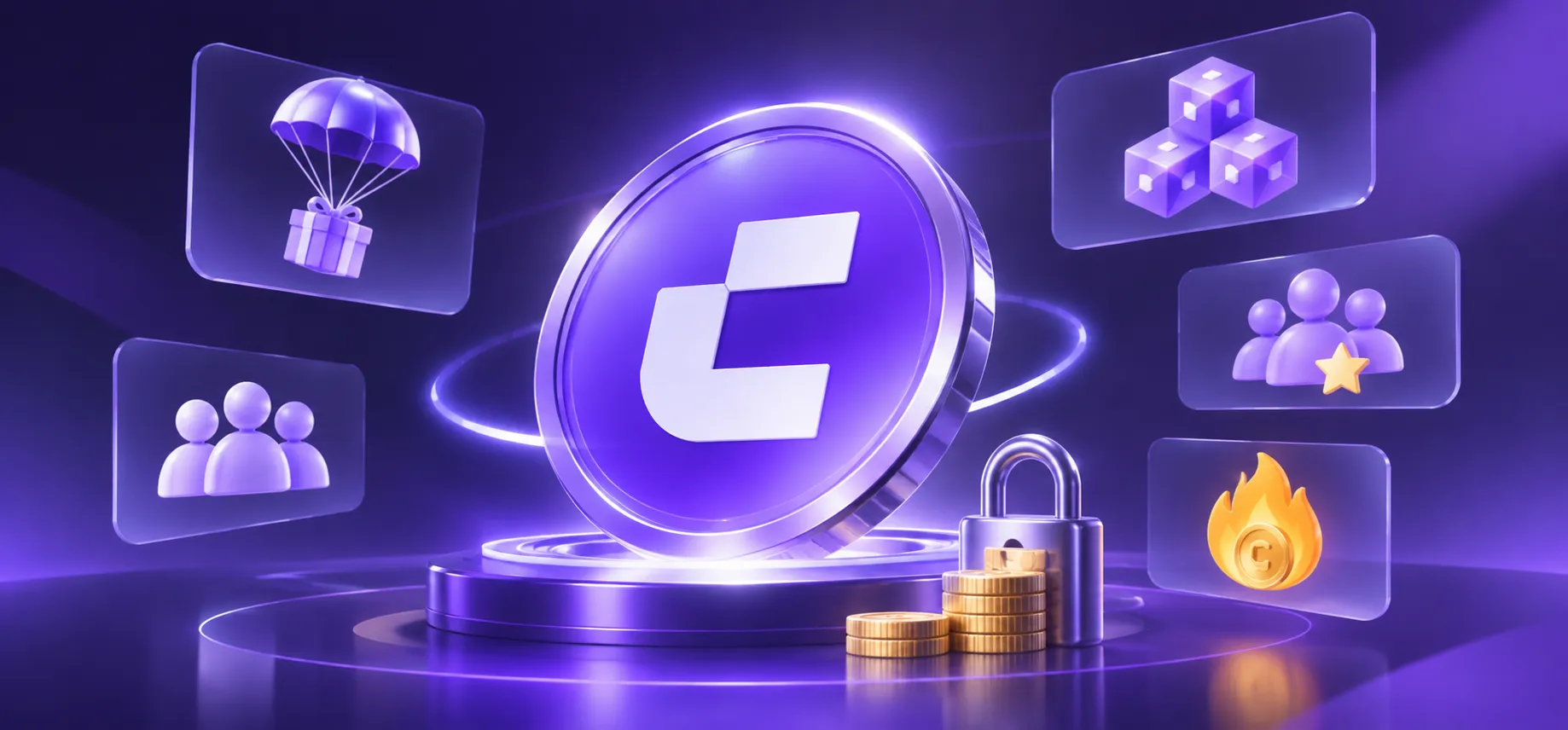
Decoding CWC Tokenomics: Understanding the 200 Million Supply, Vesting, and Burn Mechanics
Understanding CWC tokenomics requires looking beyond the token's headline supply. CoinW Coin (CWC) has a fixed total issuance of 200 million tokens, distributed among community airdrops, core contributors, ecosystem development, and team incentives. Its economic design also incorporates vesting schedules, subscription lock-ups, platform utility, and a periodic buyback-and-burn mechanism.
According to the official CWC tokenomics and introduction page, these mechanisms are intended to coordinate ecosystem incentives, manage token availability, and support the development of CoinW's trading and AI-powered services.
This guide explains how the 200 million CWC supply is allocated, when different categories become eligible for release, how token burns work, and what these arrangements mean for holders.
Quick Summary
Fixed total supply: CWC has a total issuance of 200,000,000 tokens, with no additional issuance under the announced model.
Airdrops: 40%, equivalent to 80 million CWC, is allocated to CWT conversion and ecosystem incentive airdrops.
Core contributors: 25%, or 50 million CWC, has no initial unlock, followed by a 12-month lock and 20-month vesting period.
Ecosystem Development Fund: 25%, or 50 million CWC, is scheduled for release over 24 months.
Team incentives: 10%, or 20 million CWC, has no initial unlock, with quarterly releases beginning after six months and full vesting within 48 months.
Deflationary mechanism: CoinW describes periodic secondary-market buybacks and permanent token burns, subject to platform decisions and applicable conditions.
Important distinction: Total supply, circulating supply, unlocked supply, and burned supply are different measures.
What Is CWC and Why Does Its Tokenomics Matter?
CWC (CoinW Coin) is the utility token of the CoinW ecosystem. It is designed to connect selected trading services, membership benefits, ecosystem incentives, and AI-powered applications through a common token.
CoinW introduced CWC as part of its platform-token upgrade and broader transition toward an AI-driven crypto super app. The token's proposed applications include trading fee discounts, VIP privileges, subscription services, AI Agent capabilities, and ecosystem participation.
For a broader introduction to these functions, see the CoinW Academy guide What Is CWC? CoinW Utility Token, AI Trading & Benefits.
Tokenomics refers to the rules governing a token's issuance, distribution, availability, incentives, and economic use. These rules matter because they help explain how tokens enter circulation, who may receive them, and whether mechanisms exist to remove tokens permanently from supply.
For CWC, four questions are especially important: how the 200 million tokens are distributed, when allocated tokens become available, how ecosystem activity uses CWC, and how buybacks and burns may affect supply.
How Is the 200 Million CWC Supply Distributed?
CoinW's official allocation model divides the fixed 200 million CWC supply into four categories. Community airdrops represent the largest allocation, followed by equal allocations for core contributors and ecosystem development, with a smaller share reserved for team incentives.
| Allocation Category | Percentage | CWC Amount | Release Conditions |
|---|---|---|---|
| Airdrops | 40% | 80,000,000 | CWT conversion and ecosystem incentive airdrops |
| Core Contributors | 25% | 50,000,000 | 12-month lock, followed by 20-month vesting |
| Ecosystem Development Fund | 25% | 50,000,000 | Released over 24 months |
| Team Incentives | 10% | 20,000,000 | Quarterly vesting after six months; fully vested within 48 months |
| Total | 100% | 200,000,000 | Different release schedules apply |
The allocation percentages describe the distribution of the total issuance, not the amount immediately circulating. In particular, the official summary does not establish that all airdrop tokens are distributed at launch or that the entire ecosystem allocation is immediately available.
1. Airdrops: 40% or 80 Million CWC
The largest allocation is reserved for airdrops and ecosystem incentives, representing 80 million CWC.
This category includes the conversion of the previous platform token, CWT, and incentive distributions associated with the CWC ecosystem.
Allocating 40% to this category gives community-related distribution a substantial role in the overall tokenomics model. It also connects the transition from CWT to CWC with broader participation incentives.
However, an allocation is not the same as an immediate distribution. The official allocation table does not provide a complete recipient-by-recipient airdrop calendar or establish that all 80 million tokens enter circulation simultaneously.
2. Core Contributors: 25% or 50 Million CWC
Core contributors receive an allocation of 50 million CWC, representing one-quarter of the total supply.
CoinW specifies that this allocation has no initial unlock. The tokens are locked for 12 months and then follow a 20-month vesting schedule.
The 12-month lock delays the initial availability of these tokens, while the subsequent vesting period spreads their release over additional time.
The official rules also contain an important redistribution provision: any portion of the core-contributor allocation that remains unallocated at the Token Generation Event (TGE) is assigned to the Ecosystem Development Fund.
This means the 25% core-contributor allocation represents the announced category ceiling rather than proof that every token has already been assigned to an individual recipient.
3. Ecosystem Development Fund: 25% or 50 Million CWC
The Ecosystem Development Fund receives an initial allocation of 50 million CWC, scheduled for release over 24 months.
This allocation is associated with the long-term development of the CoinW ecosystem, which includes trading infrastructure, AI-powered services, ecosystem partnerships, and participation incentives.
The fund may also receive core-contributor tokens that remain unallocated at TGE, as specified in the official allocation rules.
It is important to distinguish the fund's token allocation from actual spending. A 24-month release schedule describes when tokens may become available, but it does not establish the timing of every expenditure, transfer, or ecosystem distribution.
Users assessing the fund should monitor future disclosures concerning token releases, allocation changes, and ecosystem spending.
4. Team Incentives: 10% or 20 Million CWC
The remaining 20 million CWC is allocated to team incentives.
Under the official schedule, there is no initial unlock. Vesting begins after six months, with tokens released every three months and the allocation fully vested within 48 months.
This structure spreads team-related token availability across a multi-year period rather than allowing the entire allocation to become available immediately.
Quarterly vesting can also create identifiable periods when additional tokens become eligible for release. However, the published summary does not specify every individual installment amount or exact calendar date.
For that reason, readers should not assume that every quarterly release is identical without consulting the applicable vesting documentation.
How Does CWC Vesting and Token Lock-Up Work?
Vesting is a mechanism that makes allocated tokens available according to a predetermined schedule. A lock-up prevents tokens from being transferred, withdrawn, or otherwise accessed during a specified period, depending on the applicable rules.
These mechanisms help distinguish tokens that have been allocated from tokens that are available for circulation.
Understanding the CWC Vesting Timeline
The announced CWC vesting structure can be summarized relative to the applicable starting point:
Initial stage: Core-contributor and team-incentive allocations have no initial unlock.
After six months: Team-incentive vesting begins, with releases scheduled every three months.
After 12 months: The core-contributor lock ends, followed by a 20-month vesting schedule.
Over 24 months: The initial Ecosystem Development Fund allocation is scheduled for release.
Within 48 months: Team-incentive tokens are scheduled to become fully vested.
These periods are based on the official tokenomics summary. The summary does not establish a complete calendar of dated unlock events, and individual release arrangements should be checked against subsequent announcements.
Why Vesting Matters for Circulating Supply
Vesting can affect the amount of CWC available to the market over time.
For example, if a locked allocation becomes transferable, the quantity of tokens potentially available for trading may increase. Whether recipients actually sell, hold, stake, or use those tokens depends on their decisions and the applicable restrictions.
Consequently, an unlock does not automatically mean an equivalent quantity of tokens will be sold.
Similarly, locked tokens are not permanently removed from supply. They remain part of the token's issued supply unless subsequently burned.
Subscription Lock-Ups Are Different From Allocation Vesting
CoinW also describes a subscription-based issuance model in which subscription activities are subject to predefined lock-up periods.
These subscription restrictions should not be confused with the vesting schedules for core contributors, ecosystem development, or team incentives.
Allocation vesting governs the release of designated token categories. Subscription lock-ups govern access to tokens obtained through particular subscription arrangements.
Users should examine the applicable subscription terms, including lock duration, redemption conditions, and availability, before participating.
What Is the Difference Between Total Supply, Circulating Supply, and Burned Supply?
Understanding the distinction between supply measurements is essential when evaluating CWC tokenomics.
| Metric | Meaning | CWC Implication |
|---|---|---|
| Total Supply | Tokens issued, excluding permanently destroyed tokens under the relevant accounting convention | Initial issuance of 200 million CWC |
| Circulating Supply | Tokens considered available in the market | Affected by distributions, restrictions, and unlocks |
| Locked Supply | Tokens subject to transfer or access restrictions | Includes applicable vesting and lock-up arrangements |
| Burned Supply | Tokens permanently removed from usable supply | Depends on completed and verifiable burns |
For example, 200 million CWC in total issuance does not mean 200 million tokens are immediately tradable. Similarly, a scheduled token unlock does not increase the original issuance ceiling.
The official allocation summary alone is insufficient to calculate CWC's current circulating supply or circulating market capitalization.
Investors following broader market conditions can consult CoinW's crypto live prices and monitor major assets such as Bitcoin (BTC) and Ethereum (ETH) for additional market context.
How Does the CWC Buyback and Burn Mechanism Work?
Beyond its fixed issuance and vesting arrangements, CWC incorporates a buyback-and-burn mechanism designed to reduce token supply through periodic repurchases and permanent removal of designated tokens.
CoinW's official documentation describes secondary-market buybacks funded by a portion of platform trading fee revenue. The earlier platform-token upgrade announcement also refers to allocating a portion of quarterly net profits toward buybacks and burns.
These disclosures describe the mechanism at different levels. They should not be interpreted as establishing a fixed, guaranteed buyback amount or an unconditional burn commitment.
Step 1: Secondary-Market Token Buybacks
CoinW describes a process of periodically purchasing CWC from the secondary market.
The official framework identifies several operational characteristics:
Frequency: Buybacks are conducted periodically without a fixed public execution schedule.
Funding: A portion of platform trading fee revenue is identified as a buyback funding source.
Execution: Algorithmic order splitting and phased purchases are intended to limit market impact.
Disclosure: CoinW states that buyback amounts, average execution prices, and transaction hashes will be disclosed after execution.
The absence of a fixed execution schedule is intended to reduce the predictability of purchases and limit opportunities for market front-running.
However, buybacks remain subject to CoinW's discretion, business needs, compliance requirements, risk management considerations, and market conditions.
Step 2: Allocation of Repurchased CWC
An important feature of the official CWC framework is that repurchased tokens are not necessarily all burned.
CoinW describes a long-term ecosystem development framework containing five purposes, each assigned a 20% allocation ratio.
| Purpose | Allocation Ratio | Intended Function |
|---|---|---|
| Permanent Token Burn | 20% | Permanent removal of designated CWC |
| Ecosystem Node Rewards | 20% | Potential staking rewards for ecosystem nodes |
| Asset Package Acquisition | 20% | Acquisition of major crypto assets |
| 10 Billion Incentive Fund | 20% | User incentives and token purchase subsidies |
| Investor Protection Fund | 20% | Resources intended for extreme market conditions |
These ratios describe the published allocation framework for repurchased CWC. They are separate from the original 40%/25%/25%/10% token issuance distribution.
The 20% permanent-burn allocation should not be confused with a promise to burn 20% of the entire 200 million CWC supply. It concerns the stated use of repurchased tokens, subject to the applicable arrangements and execution decisions.
Step 3: Permanent CWC Token Burns
CoinW describes a process in which CWC designated for burning is periodically consolidated and transferred to a publicly disclosed burn address.
A burn address, sometimes called a black-hole address, is intended to make the transferred tokens permanently inaccessible.
According to the official framework, burn announcements will include the token amount, corresponding value, and burn time. After execution, the transaction hash will be published so that the community can verify the operation on-chain.
Only completed burns should be counted as permanently removed supply. Tokens merely purchased, held in reserve, or designated for a future burn have not necessarily been destroyed.
Does CWC Have a Deflationary Supply Model?
CWC is described by CoinW as having a deflationary token model, combining a fixed issuance ceiling with a mechanism for permanently reducing supply through burns.
Under the announced issuance model, the original 200 million CWC supply cannot be increased through additional issuance.
When tokens are permanently burned, the remaining supply decreases by the amount destroyed. However, the timing and quantity of future burns are not guaranteed.
It is also important to distinguish token-supply deflation from price appreciation. Reducing the number of tokens does not guarantee that the market price will rise.
Market demand, trading liquidity, ecosystem adoption, future token unlocks, and broader cryptocurrency conditions all influence CWC's market behavior.
Illustrative Example of a CWC Burn
Consider a hypothetical scenario in which 1,000,000 CWC is repurchased and the published 20% burn allocation is applied in full.
In this example, 200,000 CWC would be designated for permanent burning, while the remaining 800,000 CWC would be associated with the other purposes in the published framework.
If 200,000 CWC were then permanently burned, the original 200,000,000-token supply would decline to 199,800,000 CWC, assuming no other burns.
This is a mathematical illustration only. It does not describe a confirmed buyback, completed burn, or future commitment by CoinW.
How Do CWC Token Utility and Supply Mechanics Interact?
CWC's economic design combines token distribution with potential demand from platform services.
CoinW describes a utility cycle involving subscription mechanisms, lock-ups, service access, token consumption, and periodic buybacks and burns.
These elements have different economic functions.
Trading and Membership Benefits
CWC is intended to support selected trading benefits, including fee discounts, VIP tier acceleration, conversion privileges, and premium services.
For example, the official introduction describes a 20% spot trading fee discount when eligible fees are paid using CWC, subject to applicable service conditions.
Such benefits can create reasons for users to acquire or hold CWC, although actual demand depends on eligibility, product availability, user preferences, and the relative value of those services.
AI Agent and Data Services
CoinW also positions CWC as a utility token for selected AI-powered services, including Agent-related operations, API access, data services, and strategy subscriptions.
In this model, CWC may be used to pay for eligible services or unlock access based on holding requirements.
Some functions remain subject to phased development, separate activation requirements, and future announcements. Planned services should not be treated as universally available.
Token Consumption Is Not the Same as Burning
When a user spends CWC on a service, the tokens may be transferred or otherwise processed according to that service's rules.
This transaction does not automatically constitute a permanent burn.
Similarly, locking CWC for subscriptions or ecosystem participation may temporarily restrict token availability without reducing the token's total supply.
Only a completed permanent burn produces the supply reduction described in the deflationary mechanism.
How Transparent Are CWC Buybacks, Burns, and Token Releases?
Transparency is an important consideration for tokenomics because published allocations and proposed mechanisms must be distinguished from completed transactions.
CoinW's official CWC documentation describes several transparency commitments:
On-chain verification: Transaction hashes for relevant buyback and burn activities are intended to support independent verification.
Quarterly reporting: CoinW states that quarterly buyback and burn reports will be published.
Public burn address: The designated address is intended to be displayed on CoinW's official website.
Community oversight: Users are encouraged to independently review disclosed transactions and related information.
These are stated disclosure commitments rather than independent evidence that a particular quantity of CWC has already been repurchased or burned.
To evaluate actual execution, users should compare published reports, transaction hashes, burn-address activity, and any updated token allocation or vesting announcements.
What Are the Main Risks of CWC Tokenomics?
Although the CWC model includes fixed issuance, vesting schedules, and potential supply reductions, these features do not eliminate market or operational risks.
Token unlock risk: Future vesting releases may increase the quantity of CWC available for circulation.
Buyback uncertainty: Buyback amounts and timing depend on CoinW's decisions and applicable business, compliance, and market conditions.
Burn execution risk: Planned burns should not be treated as completed until publicly verified.
Liquidity risk: A fixed supply does not guarantee sufficient market liquidity or stable execution prices.
Utility adoption risk: Demand for CWC-related services depends on actual product availability, user adoption, and the attractiveness of the offered benefits.
Regulatory and policy risk: Platform services, token programs, and participation rules may change in response to legal or operational requirements.
Price volatility: CWC remains a digital asset exposed to potentially significant market fluctuations and losses.
CWC does not represent ownership of CoinW, a claim on company profits, or a guaranteed investment return. Buybacks, ecosystem funds, and token incentives should not be interpreted as price guarantees or principal-protection commitments.
FAQs About CWC Tokenomics
What is the total supply of CWC?
CWC has an announced total issuance of 200,000,000 tokens. CoinW's official upgrade announcement states that no additional issuance is permitted under the token's model.
How is the 200 million CWC supply allocated?
The allocation is 40% for airdrops and CWT conversion, 25% for core contributors, 25% for the Ecosystem Development Fund, and 10% for team incentives.
When do core-contributor CWC tokens unlock?
The core-contributor allocation has no initial unlock. Tokens are locked for 12 months, followed by a 20-month vesting schedule. Exact calendar dates should be confirmed through official disclosures.
How long does team-incentive vesting last?
Team-incentive vesting begins after six months, with token releases every three months and full vesting scheduled within 48 months.
Are all 80 million airdrop tokens circulating immediately?
Not necessarily. The 80 million CWC figure is the total allocation for CWT conversion and ecosystem incentive airdrops. It does not independently establish the initial circulating supply or complete distribution schedule.
Does CoinW burn 20% of all CWC tokens?
No. The official buyback framework assigns a 20% ratio to permanent burns within its stated allocation of repurchased tokens. This is not equivalent to burning 20% of the entire 200 million CWC issuance.
Are locked CWC tokens considered burned?
No. Locked tokens remain part of the issued supply but are subject to access or transfer restrictions. Burned tokens are permanently removed from usable supply.
Do CWC buybacks guarantee a higher token price?
No. Buybacks and burns may affect supply, but CWC's market price remains dependent on demand, liquidity, token unlocks, market sentiment, and other factors.
Conclusion: What Does CWC's Tokenomics Structure Mean for Its Future?
CWC's tokenomics combines a fixed 200 million-token issuance with four allocation categories, differentiated vesting schedules, subscription lock-ups, and a periodic buyback-and-burn framework.
The 40% airdrop allocation gives community-related distribution the largest share of the initial supply structure. Core-contributor and team-incentive allocations are subject to delayed releases, while the Ecosystem Development Fund follows a 24-month release schedule.
The buyback framework introduces a potential mechanism for permanently reducing supply, but it is essential to distinguish tokens repurchased for ecosystem purposes from tokens actually burned.
Ultimately, evaluating CWC requires monitoring both sides of its economic model: the release of previously allocated tokens and the actual execution of supply-reduction mechanisms. These should be assessed alongside platform adoption, token utility, and independently verifiable disclosures.
References / Sources
CoinW: CWC Global Ecosystem Utility Token — Official Chinese Overview
CoinW: Official Announcement on the Upgrade to CWC
CoinW Academy: CWC Utility, Allocation and Vesting Explained
Risk Disclaimer: This article is for educational and informational purposes only and does not constitute investment advice or a recommendation to buy, sell, or hold CWC. Token distributions, vesting arrangements, buybacks, burns, and platform benefits are subject to applicable official rules and updates. Digital assets involve significant risks, including the potential loss of invested funds.
You May Also Like
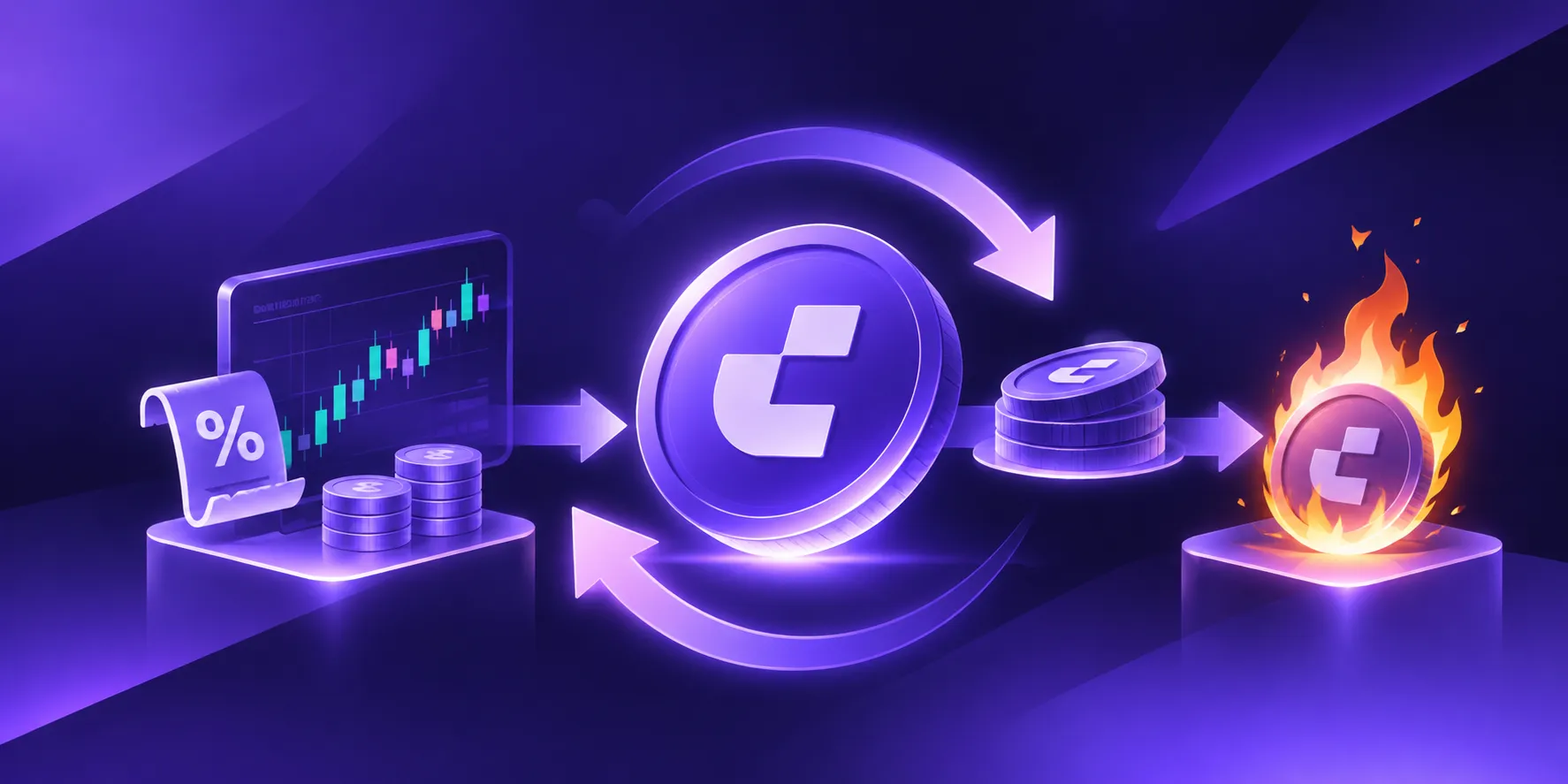
Understanding Deflationary Models: How Buyback & Burn Supports Crypto Ecosystems
Explore how deflationary token models work and how CoinW's CWC ecosystem combines trading fee revenue, token buybacks, and a 20% permanent burn mechanism to support long-term sustainability.
Bitcoin Liquidity Explained: BTC Heatmaps, Market Depth & Price Movements
Learn how Bitcoin liquidity works, what affects BTC market depth, and how liquidity heatmaps, liquidation clusters, and global liquidity influence Bitcoin prices and trading strategies.

What Is CoinW AI Think Tank? Features, Benefits, and How It Works
Discover CoinW AI Think Tank, an AI-powered crypto analysis tool using 13 AI agents, bull-bear debates, and multiple data sources to deliver transparent market insights.